Handheld Sewing Machine Explained: A UK Buyer's Guide
Short answer
A handheld sewing machine is a compact, one-handed machine built for quick fixes — hems, split seams and light repairs — where getting the job done in minutes matters more than full-size power. For a busy UK parent facing a last-minute school-uniform emergency, it turns a dropped trouser hem or a loose shirt seam into a five-minute job on light cotton and polycotton. It is not a substitute for a full-size machine on heavy fabrics, and it is not meant to be.
What is a handheld sewing machine?
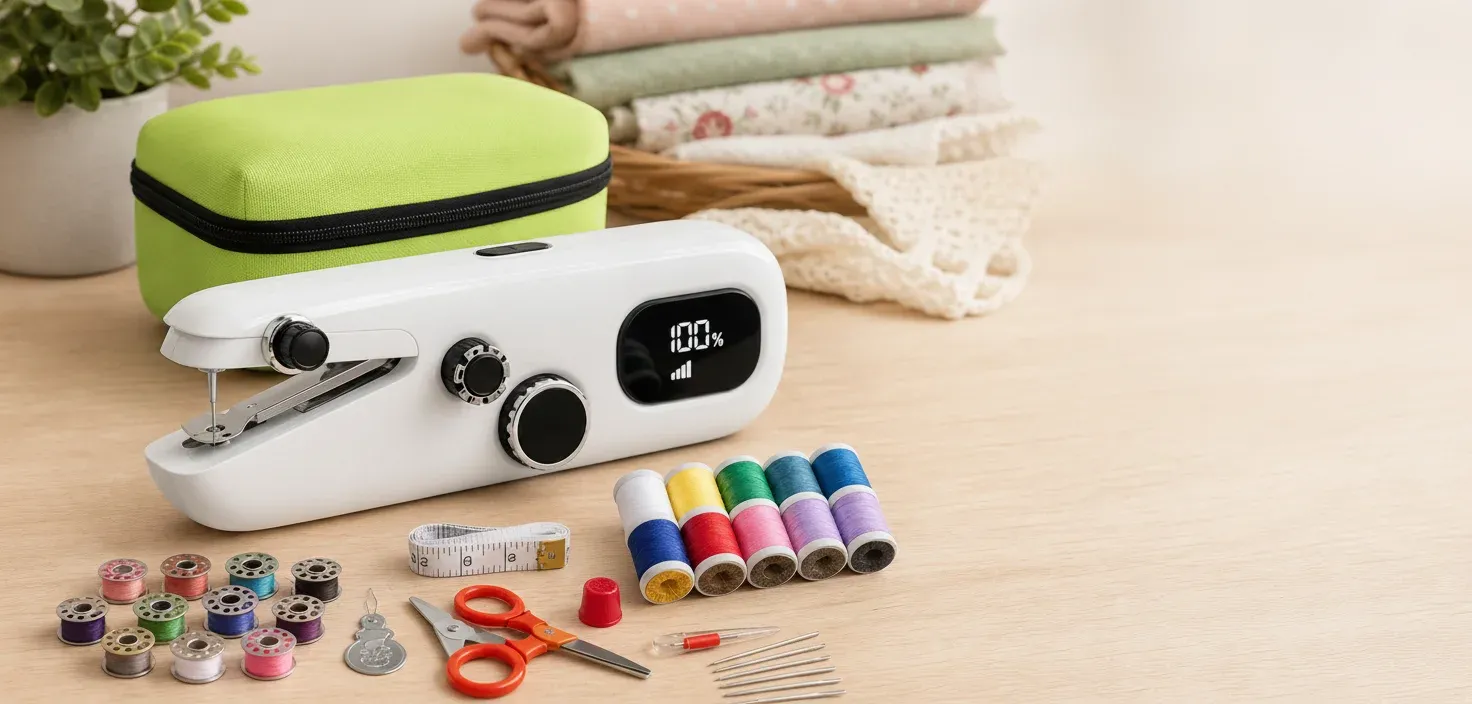
A handheld sewing machine is a small, cordless device you hold in one hand and guide along the fabric, forming a line of stitches as you go. Unlike a full-size machine with a foot pedal, table and threaded arm, it needs no permanent set-up: you charge it, thread it and sew. The Handheldse Portable Stitch is a rechargeable model with LCD guidance and three speed settings, so a complete beginner can start on the slowest speed and hold a straight line without a training course.
Because it is light and lives in a drawer rather than on a worktop, it suits households that need to mend and alter now and then — not sew garments from scratch.
The ten-minute school-uniform fix
The classic moment is 8am on a school morning: the run leaves in ten minutes and a trouser hem has dropped or a shirt side-seam has pulled open. An alterations shop will not have it ready for today, and buying a replacement uniform for one undone seam is money you would rather keep. This is where a handheld machine earns its place.
On light polycotton uniform trousers or a school shirt you can:
- Set the slowest of the three speeds so you stay in control near the edge;
- Run a straight line along the dropped hem or the open seam;
- Reverse a couple of stitches at each end to lock it, then trim the thread.
It is a repair rather than tailoring, but a tidy, secure repair that gets a child out of the door on time and keeps a favourite uniform in use for another term.
What it handles well — and what it does not
Handled honestly, a handheld sewing machine is a light-duty repair tool. The Handheldse model is rated for cotton, polycotton and linen-blend fabrics — the weight of most uniforms, shirts, cotton dresses and simple craft cottons — and is designed for straight hems, seams and small mends.
What it is not built for is heavy or layered fabric: a structured blazer, a winter coat, thick denim, leather or upholstery. Forcing those through any compact machine causes skipped stitches and jams. If your regular jobs are heavy, or you want to make whole garments, a full-size machine is the right choice — and a compact desktop mini sewing machine sits between the two.
How to choose a handheld sewing machine in the UK
Match the machine to the real job rather than a long feature list. Before you buy, check:
- Speed control: a slow first speed matters far more than a high top speed when you are learning and working close to an edge.
- Power: a rechargeable, cordless machine means no trailing lead across the kitchen table.
- Threading and guidance: clear on-device LCD guidance shortens the first, most frustrating attempt.
- Fabric range: confirm it is rated for the light fabrics you actually mend, and accept the heavy-fabric limits.
- UK support: a seller with a warranty and simple returns is worth more than a cheaper, unsupported gadget.
On those measures the Handheldse Portable Stitch is a rechargeable handheld machine at £67.98, with LCD guidance, three speeds, a 12-month warranty, free next-day UK delivery and 30-day returns, and a 4.7 rating across 362 reviews on its product page.
Is a handheld sewing machine worth it?
If you want an affordable, grab-and-go way to keep uniforms and everyday clothes in service, yes. It will not replace a full-size machine, and it should not be judged as one. Taken for what it is — a quick-repair tool for light fabrics that you can actually thread and control — a handheld machine is worth keeping in the drawer for the next wardrobe emergency.
Frequently asked questions
Can a handheld sewing machine sew school uniform trousers?
Yes. On light polycotton or cotton uniform trousers it handles dropped hems and split seams well on a slow speed. Avoid thick, structured blazers and heavily layered waistbands, which need a full-size machine.
Is a handheld sewing machine hard for a complete beginner?
No. Start on the slowest of the three speeds, follow the LCD guidance to thread it, and practise on a fabric scrap first. Most beginners are repairing a real seam within a few minutes.
What fabrics can a handheld sewing machine not handle?
Thick denim, leather, upholstery and structured or multi-layered garments are outside its range. It is designed for light-to-medium fabrics such as cotton, polycotton and linen blends.
Is a handheld sewing machine cheaper than using an alterations shop?
For frequent small repairs, usually yes. At £67.98 the machine pays for itself over a handful of hems and seams you would otherwise pay to have altered, and it is ready whenever the next school-morning emergency happens.
Ready to try Handheldse?
Shop Now — £67.98