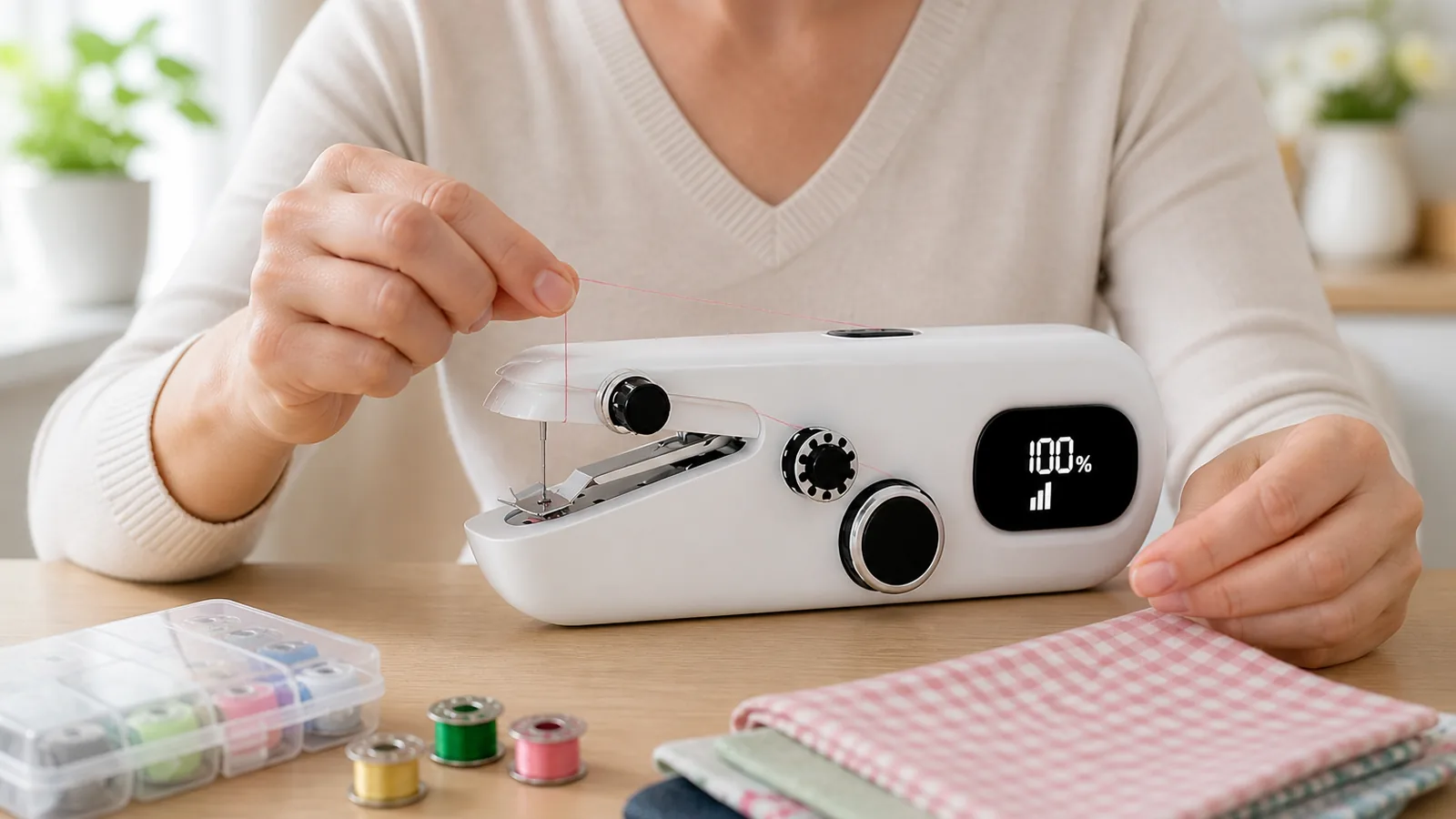
how to thread a handheld sewing machine UK
Direct answer: slow speed, charge first, follow thread path before fabric
For how to thread a handheld sewing machine UK beginners should start with a charged unit, set the slowest speed, and complete the full thread path before any fabric goes under the needle. Compact handheld models are widely sold for quick mending and DIY, so a calm first setup matters more than rushing into a seam.
Unbox checklist: needle, spool, threader, spare needle
Before you thread, lay out the basics so nothing is missing mid-setup:
- Needle fitted and seated as your manual shows
- Thread spool ready to mount
- Needle threader accessory, if included
- Spare needle kept to one side
Many UK-sold handheld sewists are marketed as compact, lightweight tools for on-the-spot repairs and beginner DIY, which is why a simple unbox check saves time later.
Step-by-step threading without inventing industrial lockstitch claims
Use this gentle walkthrough for thread path setup portable sewing machine UK sessions at home:
- Charge or power the machine as your listing describes, then switch it off while you thread.
- Place the spool so the thread can unwind freely without snagging.
- Guide the thread through each marked guide or channel in order—do not skip a loop because the path looks short.
- Use the needle threader accessory handheld sewing UK kits often include, or pass the thread through the needle eye by hand if preferred.
- Leave a short tail of thread beyond the needle so the first stitch can catch.
- On models with an LCD and speed choices, keep the slowest setting for your first threading check.
This is a first threading walkthrough LCD mini sewer UK users can follow for home crafting and mending—not industrial production sewing.
Test stitch on scrap polycotton
Before you sew a garment, run a short test on scrap polycotton. Hold the fabric steadily, keep speed low, and watch whether the thread feeds smoothly. If the stitch looks loose or skips, stop and re-check the path rather than forcing the seam.
Common miss-threads and quick fixes
- Thread keeps slipping out of the needle: re-thread with a longer tail and confirm the eye is fully passed.
- Thread tangles near the spool: remount the spool so it rotates freely.
- Machine runs but fabric does not advance cleanly: pause, re-seat the needle, and re-follow the marked path from spool to eye.
- Uneven first stitches: return to scrap fabric at the slowest speed until the feed looks even.
Next step to product detail after successful first stitch
Once your scrap test looks steady, you can review the current product details for this rechargeable handheld sewing machine for beginners with LCD and 3-speed settings, aimed at DIY home crafting and mending.
FAQ
Do I need to charge before the first thread?
Yes—charge or connect power first so you can test at a slow speed as soon as threading is complete. Keep USB or battery notes general and follow your own unit’s guidance.
Should I start on real clothes?
No. Finish the thread path, then test on scrap polycotton before any garment repair.
Are handheld machines for heavy production work?
No. Treat them as portable helpers for light mending and DIY, not industrial lockstitch or factory sewing.